

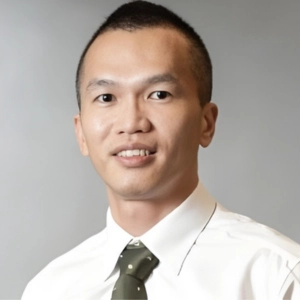
Edwin Chng
IHH SG, SingaporePresentation Title:
Barriers and facilitators towards implementing cancer screening in primary care: A qualitative study of primary care doctors’ and policymakers’ perspectives
Abstract
Background: Despite high levels of public awareness of cancer screening programmes in Singapore, uptake remains low. Whilst the perspective of members of the public has been well studied, the perspectives of primary care doctors and health policymaker on barriers and facilitators of cancer screening is less understood.
Aim: To investigate the barriers and facilitators influencing the implementation of cancer screening in Singapore from the perspective of primary care doctors and policymakers.
Methods: Purposive and snowball sampling were used to recruit 30 primary care doctors and five health policymakers. Semi-structured interviews were conducted between May and July 2025. Inductive and deductive thematic coding based on the Integrated Screening Action Model (I –SAM) was carried out by two researchers per transcript, facilitated by NVivo software.
Results: Doctor and clinic: Barriers to offering cancer screening included lack of time, de-prioritisation compared to chronic disease management, and lack of incentives. A strong clinician-patient relationship was seen as a facilitator.
Patient: Perceived barriers included embarrassment, fear, and discomfort. Reluctance to participate in cancer screening was perceived to be related to lack of symptoms, not seeing a need to screen, and health beliefs, fatalism and stigma, which may be shaped by faith and religion. Higher education levels and health literacy were associated with increased cancer screening. Family support was also a key motivator.
Policy: A significant perceived barrier was cost, especially for older, retired Singaporeans and foreigners, and a lack of awareness of existing subsidies. Government-led advertising campaigns were raised as a strategy to raise screening participation due to high levels of trust.
Conclusion: Ongoing alignment between policies and clinical everyday practice, complemented by community-based programmes, may be required to optimise sub-optimal screening.
Biography
Edwin Chng is a senior physician at Parkway Shenton. He is also clinical tutor at National University of Singapore, Duke-NUS Medical School, and NTU-Lee Kong Chian School of Medicine, and is actively involved in research and publications.

Organization Location
1309 Coffeen Avenue, STE 1200, Sheridan, Wyoming 82801, USA
Mail us at
Drop us an email for Program enquiry
primarycare@scientexevents.org
General queries
contact@scientexconferences.com
Registration Details
finance@scientexconferences.com
publichealthcare@scientexconferences.com
Our Social Presence
Call us at
USA : (+1) 929 392 1801