

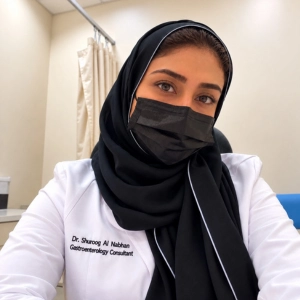
Shuroog Nabhan
King Fahad Armed Forces Hospital, KSAPresentation Title:
Comparative efficacy of rectal diclofenac and rectal indomethacin in preventing post endoscopic retrograde cholangiopancreatography pancreatitis: A systematic review
Abstract
Post-endoscopic retrograde cholangiopancreatography pancreatitis (PEP) is the most frequent complication of endoscopic retrograde cholangiopancreatography (ERCP) and is a major source of ERCP procedure related morbidity. Nonsteroidal anti-inflammatory drugs (NSAIDs) such as diclofenac and indomethacin are commonly used for PEP prophylaxis because of their anti-inflammatory properties. The aim of the present systematic review was to compare the efficacy of rectal diclofenac versus rectal indomethacin in preventing PEP. The review was conducted using the Preferred Reporting Items for Systematic Reviews and Meta Analyses (PRISMA) 2020 guidelines, and studies were identified through a comprehensive search of databases covering the period from 2019 to 2025. Nine studies were included. The findings indicate that both rectal diclofenac and rectal indomethacin are effective prophylactic agents and significantly reduce the incidence of PEP. In conclusion, the available evidence supports the routine use of either rectal diclofenac or rectal indomethacin to prevent post-ERCP pancreatitis.
Keywords: endoscopic retrograde cholangiopancreatography, nsaids, post-ercp pancreatitis, prophylaxis, rectal diclofenac, rectal indomethacin
Biography
Shuroog Mohammed Nabhan is a consultant gastroenterologist at King Fahad Armed Forces Hospital in Jeddah, Saudi Arabia. She obtained her MBBS from King Abdulaziz University, followed by the Saudi Board of Internal Medicine and the Saudi Fellowship in Adult Gastroenterology. She has extensive clinical and academic experience and has served as both director and deputy director of the adult Gastroenterology Fellowship Training Program. She is currently nearing completion of her advanced therapeutic endoscopy training with a particular focus on ERCP and advanced biliary interventions,further expanding her expertise in advanced endoscopic procedures. She is actively involved in medical education, clinical research, and quality improvement, with particular interests in inflammatory bowel disease, colorectal cancer prevention, and gastrointestinal endoscopy. She has received several certificates of appreciation from the general directorate of nedical services, Ministry of Defense, in recognition of her contributions to medical education and training. She is a member of the Saudi Gastroenterology Association (SGA) and the European Crohn’s and Colitis Organisation (ECCO) and regularly participates in national and international gastroenterology conferences and educational activities.

Organization Location
1309 Coffeen Avenue, STE 1200, Sheridan, Wyoming 82801, USA
General Enquiry
contact@scientexconferences.com
Finance Enquiry
finance@scientexconferences.com
Call us at
USA : (+1) 929 392 1801