


Digital Health in Primary Care: Opportunities and Challenges for Modern Healthcare
Introduction
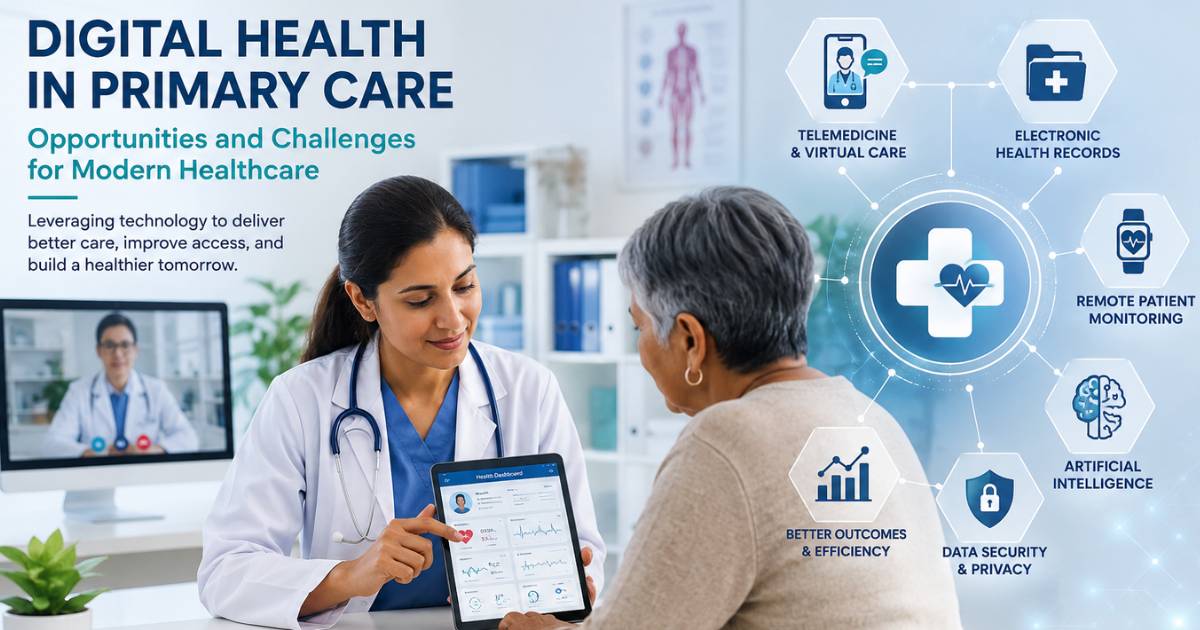
Digital health is transforming the way healthcare is delivered, making primary care more accessible, efficient, and patient-centered than ever before. From telemedicine and electronic health records to wearable devices and artificial intelligence (AI), technology is helping healthcare professionals improve patient outcomes while streamlining clinical workflows.
As healthcare systems continue to evolve, digital innovation is becoming an essential part of primary care. It enables healthcare providers to detect diseases earlier, monitor chronic conditions more effectively, and communicate with patients beyond traditional clinic visits. However, alongside these opportunities come challenges such as data security, digital literacy, and equitable access to technology.
This article explores how digital health is reshaping primary care and the opportunities and challenges that will influence the future of modern healthcare.
What Is Digital Health?
Digital health refers to the use of technology to support healthcare delivery, improve patient engagement, and enhance clinical decision-making. It combines healthcare services with digital tools to make medical care more connected and efficient.
Some of the most common digital health technologies include:
- Telemedicine and virtual consultations
- Electronic Health Records (EHRs)
- Mobile health (mHealth) applications
- Wearable health devices
- Remote patient monitoring
- Artificial Intelligence (AI)
- Digital prescription systems
Together, these technologies are helping healthcare providers deliver timely, evidence-based care while improving the overall patient experience.
Opportunities for Primary Care
Expanding Access Through Telemedicine
Telemedicine has become one of the most significant advances in primary care. Patients can now consult healthcare professionals remotely using secure video or telephone appointments, reducing travel time and improving access for those in rural or underserved areas.
Virtual consultations are particularly useful for follow-up visits, medication reviews, chronic disease management, and preventive care discussions. While not every medical condition can be managed remotely, telemedicine has become a valuable complement to face-to-face care.
Better Care Coordination with Electronic Health Records
Electronic Health Records have transformed how patient information is managed. Digital records allow healthcare professionals to access medical histories, laboratory reports, prescriptions, and treatment plans in one secure location.
The benefits include:
- Faster clinical decision-making
- Reduced duplication of tests
- Improved communication among healthcare providers
- Better continuity of care
- Enhanced patient safety
Well-managed digital records help ensure that patients receive coordinated care across different healthcare settings.
Supporting Chronic Disease Management
Primary care plays a vital role in managing long-term conditions such as diabetes, hypertension, asthma, and cardiovascular disease.
Digital health tools enable healthcare providers to monitor patients remotely through connected devices that measure blood pressure, blood glucose, heart rate, or oxygen saturation. This continuous monitoring allows earlier intervention when changes are detected and encourages patients to become more involved in managing their health.
Artificial Intelligence in Clinical Practice
Artificial Intelligence is increasingly supporting healthcare professionals by analysing medical data and identifying patterns that may assist clinical decision-making.
AI applications in primary care include:
- Clinical decision support
- Risk prediction for chronic diseases
- Administrative workflow improvement
- Medical image analysis
- Population health analytics
Rather than replacing clinicians, AI is designed to support healthcare professionals by providing additional insights that complement their expertise and judgement.
Challenges Facing Digital Healthcare
Data Privacy and Security
As more healthcare information is stored electronically, protecting patient data becomes increasingly important. Healthcare organisations must implement strong cybersecurity measures to safeguard confidential medical information and maintain public trust.
Ensuring compliance with data protection regulations and investing in secure digital systems are essential components of responsible digital healthcare.
Digital Literacy
Technology can only improve healthcare when patients and healthcare professionals know how to use it effectively. Older adults, individuals with limited digital experience, and underserved communities may face challenges accessing digital health services. Providing education and user-friendly technologies will help ensure that no one is left behind as healthcare becomes increasingly digital.
Healthcare Equity
Digital transformation should improve healthcare for everyone—not only for those with reliable internet access or advanced technology. Expanding broadband infrastructure, improving access to affordable digital devices, and designing inclusive healthcare platforms are important steps toward reducing disparities in healthcare access.
Maintaining the Human Connection
Although technology improves efficiency, it should never replace the trust and communication that define primary care. Listening to patients, understanding their concerns, and building long-term relationships remain central to effective healthcare. Digital tools should enhance these interactions rather than reduce personal engagement.
The Future of Digital Health
The future of primary care will be shaped by continued innovation and collaboration. Advances in wearable technology, remote patient monitoring, predictive analytics, and AI-supported healthcare are expected to improve preventive care and enable more personalised treatment approaches.
Future developments may include:
- Personalised preventive healthcare plans
- AI-assisted clinical decision support
- Expanded remote monitoring for chronic diseases
- Smart diagnostic technologies
Greater integration between healthcare providers through secure digital platforms
As these technologies continue to develop, healthcare systems must balance innovation with patient safety, privacy, and equitable access.
Conclusion
Digital health is redefining primary care by improving accessibility, strengthening chronic disease management, enhancing preventive healthcare, and supporting more informed clinical decisions. Technologies such as telemedicine, electronic health records, wearable devices, and artificial intelligence are creating new opportunities to deliver high-quality, patient-centred care.
At the same time, healthcare organisations must address challenges related to cybersecurity, digital literacy, and healthcare equity to ensure that these innovations benefit all communities.
The future of primary care lies in successfully combining technological advancement with compassionate, evidence-based healthcare. By embracing responsible digital innovation, healthcare professionals can continue to improve patient outcomes while building stronger, more resilient healthcare systems for generations to come.
You Might Also Like
More Blogs













Archives

Quick Links
Explore More
Past Conferences
Past Webinars
General Enquiry
Finance Enquiry
Contact Number
- (+1) 929 392 1801