
Inspiring Keynote Presentations from Primary Care 2026: Advancing Innovation in Primary Care and Public Healthcare
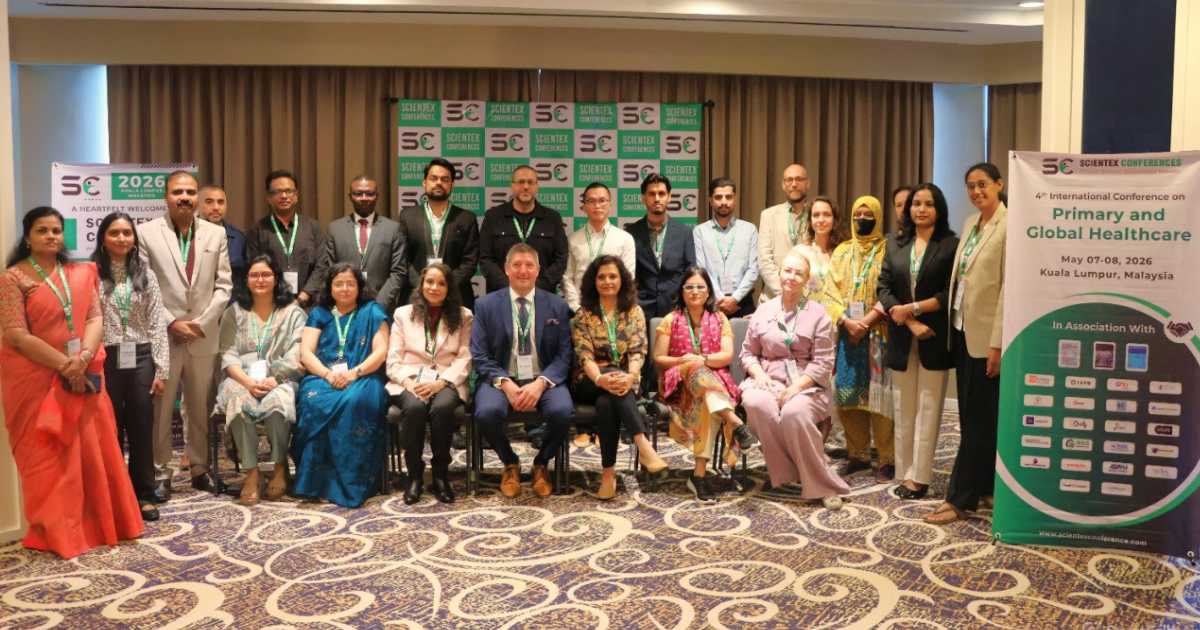
The 4th International Conference on Primary Care and Public Healthcare, held in Kuala Lumpur, Malaysia, brought together distinguished healthcare professionals, clinicians, researchers, academicians, and policymakers from around the world. The conference served as a platform for exchanging innovative ideas, sharing evidence-based research, and discussing practical solutions to strengthen primary healthcare systems globally.
Among the many scientific sessions, the keynote presentations stood out for their depth, relevance, and impact. Renowned experts shared valuable perspectives on some of today's most pressing healthcare challenges, offering attendees practical knowledge and future-focused strategies that can be applied across clinical practice, education, and healthcare management.
Day 1 Keynote Highlights
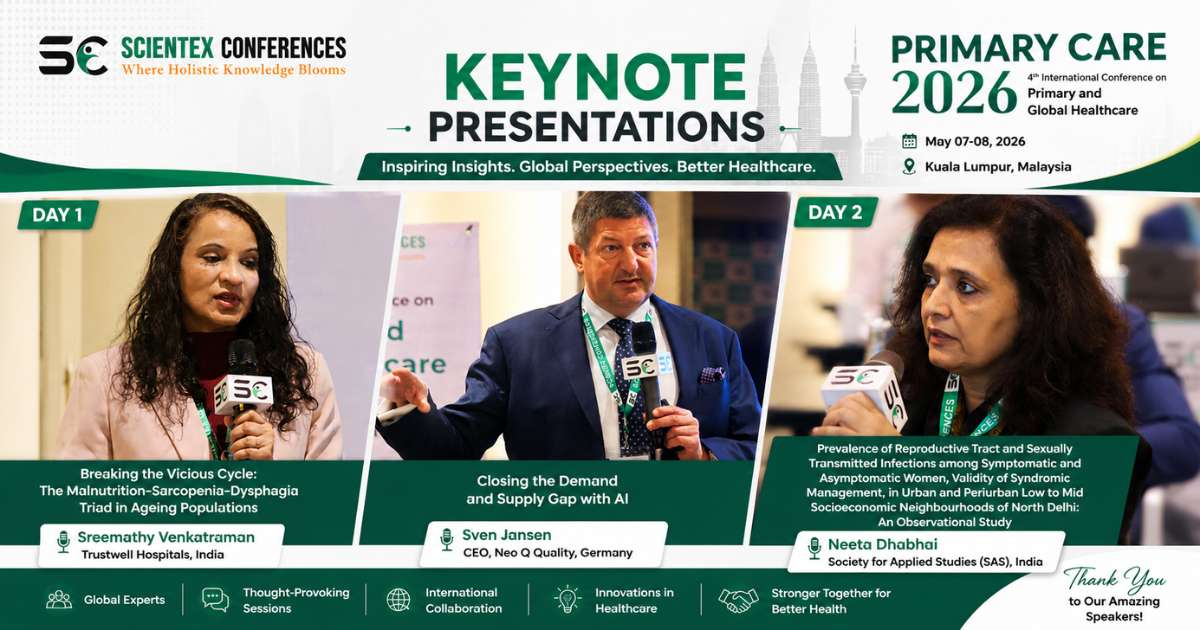
Breaking the Vicious Cycle: The Malnutrition–Sarcopenia–Dysphagia Triad in Ageing Populations
Speaker: Sreemathy Venkatraman
Affiliation: Trustwell Hospitals, India
Dr. Sreemathy Venkatraman delivered an insightful presentation on one of the growing concerns in geriatric healthcare—the interconnected relationship between malnutrition, sarcopenia, and dysphagia among older adults.
The session explained how inadequate nutrition contributes to muscle loss, which subsequently affects swallowing function and further worsens nutritional status. This cycle significantly impacts quality of life, increases hospitalization rates, and places additional pressure on healthcare systems worldwide.
The presentation emphasized:
- Early nutritional screening for older adults
- Multidisciplinary approaches involving physicians, dietitians, and rehabilitation specialists
- Preventive interventions to improve healthy ageing
- The importance of integrating nutrition into routine primary care
The session encouraged healthcare professionals to adopt proactive strategies that support healthy ageing and reduce preventable complications among elderly populations.
Closing the Demand and Supply Gap with Artificial Intelligence
Speaker: Sven Jansen
CEO, Neo Q Quality, Germany
Artificial Intelligence continues to reshape healthcare delivery, and Sven Jansen demonstrated how AI can address one of healthcare's greatest challenges—balancing increasing patient demand with limited healthcare resources.
The keynote explored practical AI applications that improve healthcare efficiency while maintaining high standards of patient care.
Key discussion points included:
• AI-assisted clinical workflows
• Optimizing healthcare resource allocation
• Enhancing patient experience through intelligent automation
• Supporting healthcare professionals with data-driven decision making
• Improving operational efficiency in hospitals and primary care settings
The presentation highlighted that AI should be viewed as a tool that supports healthcare professionals rather than replacing them, enabling clinicians to dedicate more time to patient-centered care.
Day 2 Keynote Highlights
Feedback on Medical Education Status in KSA: How to Give Effective Feedback During Residency Clinical Training – A Review Article
Speaker: Olfat Janbi
Jeddah First Cluster – King AbdulAziz Hospital, Kingdom of Saudi Arabia
Medical education continues to evolve alongside healthcare delivery. Dr. Olfat Janbi focused on the importance of constructive feedback in residency training and its role in developing competent healthcare professionals.
The presentation reviewed current practices within residency education in Saudi Arabia while outlining methods for delivering meaningful and effective feedback during clinical training.
Important takeaways included:
• Building a supportive learning environment
• Encouraging reflective clinical practice
• Developing communication between mentors and residents
• Standardizing assessment methods
• Improving competency-based medical education
The session reinforced that quality feedback remains one of the strongest drivers of professional growth and clinical excellence.
Prevalence of Reproductive Tract and Sexually Transmitted Infections Among Symptomatic and Asymptomatic Women: Validity of Syndromic Management in Urban and Peri-Urban Communities of North Delhi
Speaker: Neeta Dhabhai
Society for Applied Studies (SAS), India
Dr. Neeta Dhabhai presented findings from an important observational study evaluating reproductive tract infections (RTIs) and sexually transmitted infections (STIs) among women from urban and peri-urban communities in North Delhi.
The presentation examined the effectiveness of syndromic management and highlighted challenges in identifying infections among asymptomatic women.
The research emphasized:
• Community-based surveillance for RTIs and STIs
• Strengthening women's reproductive healthcare
• Improving diagnostic accuracy
• Evidence-based screening approaches
• Enhancing preventive public health programs
The study underscored the importance of early detection and comprehensive reproductive health services to improve healthcare outcomes for women.
Driving Innovation Through Scientific Exchange
The keynote sessions reflected the diverse nature of modern primary care, covering healthy ageing, digital transformation, medical education, and women's health. Each presentation demonstrated how scientific research can translate into practical solutions that improve patient care and strengthen healthcare systems worldwide.
Primary Care 2026 once again highlighted the value of international collaboration, bringing together experts from different countries and disciplines to address common healthcare challenges through knowledge sharing and innovation.
As the conference concluded, participants returned to their institutions with new perspectives, practical insights, and strengthened professional networks that will continue to advance primary care and public health across the globe.
You Might Also Like
More Blogs




Archives

Quick Links
Explore More
Past Conferences
Past Webinars
General Enquiry
Finance Enquiry
Contact Number
- (+1) 929 392 1801